Teseo at Supabase Select 2026 and Industrial Intelligence for Agents
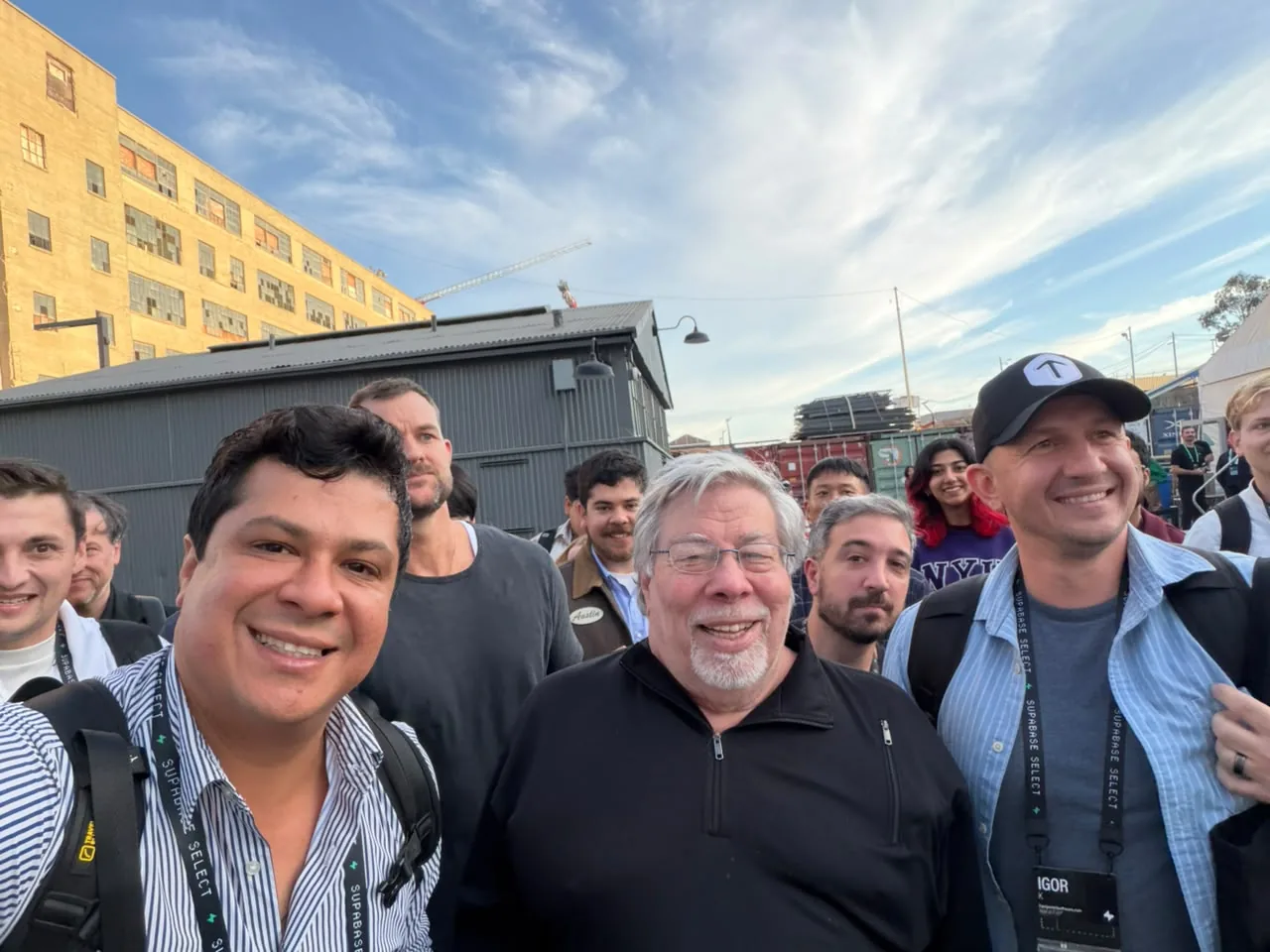
Teseo Data Lab took part in Supabase Select 2026 and in the hackathon held the following day in San Francisco. The October 2 conference day and the October 3 build session made it possible to connect two questions: how software development is changing with artificial intelligence agents, and what information those agents need to work in industrial sectors.
For Teseo, that connection took shape in H0 ConcreteOS, a proposal for evidence-backed industrial context whose first application focuses on the concrete industry in Mexico.
The experience brought together infrastructure, product vision and hands-on development. Speakers on the program included Ant Wilson, co-founder and CTO of Supabase; Steve Wozniak, co-founder of Apple; and Garry Tan, president and CEO of Y Combinator. From our perspective, the thread connecting this experience to our work is concrete: building tools that bring AI's capabilities closer to the real conditions of a company.
Ant Wilson's opening, Steve Wozniak's appearance and the conversation with Garry Tan brought together different profiles from the tech ecosystem. For Teseo, the program offered a framework for thinking about the relationship between infrastructure, the building experience and business problems: three dimensions that need to come together when developing an AI product.
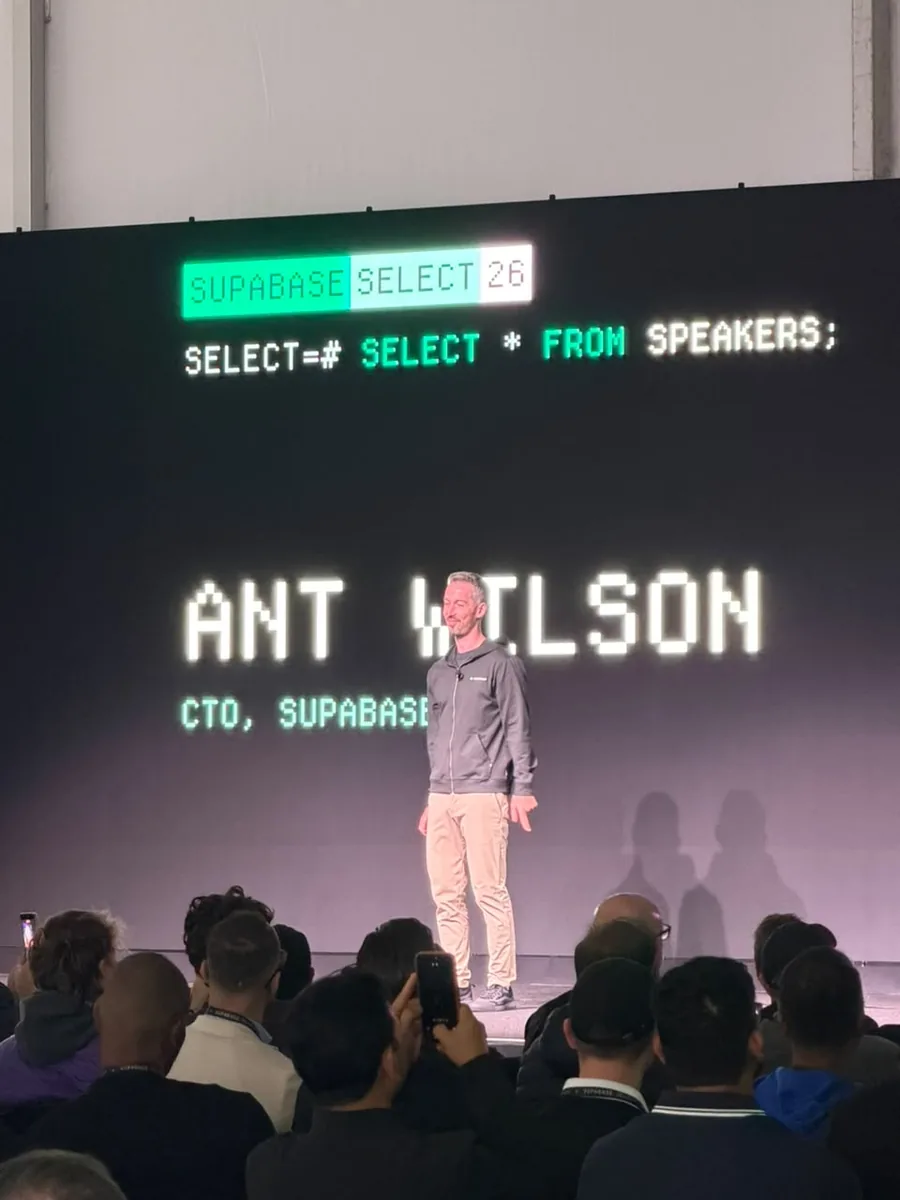
In the opening, Ant Wilson presented the evolution of the Supabase ecosystem and some of its integrations. Among them, he mentioned the connection with Stripe Data Pipelines and access to Supabase from ChatGPT, as well as work with other AI environments. His talk showed how the way people access a platform changes when agents can use it too.
Paul Copplestone, CEO and co-founder of Supabase, then expanded on that direction in the keynote: a platform whose structure and configuration can be managed from code, by people and agents alike.
For Teseo, this raises a product decision: beyond designing understandable screens, we need to prepare data and tools that other systems can query with defined permissions. In an industrial setting, that connection requires preserving the meaning and the backing of every data point.
The program reserved a closing talk for Steve Wozniak, co-founder of Apple. His participation added a figure tied to the history of personal computing to an agenda that also brought together the people building infrastructure, models and tools for agents today.
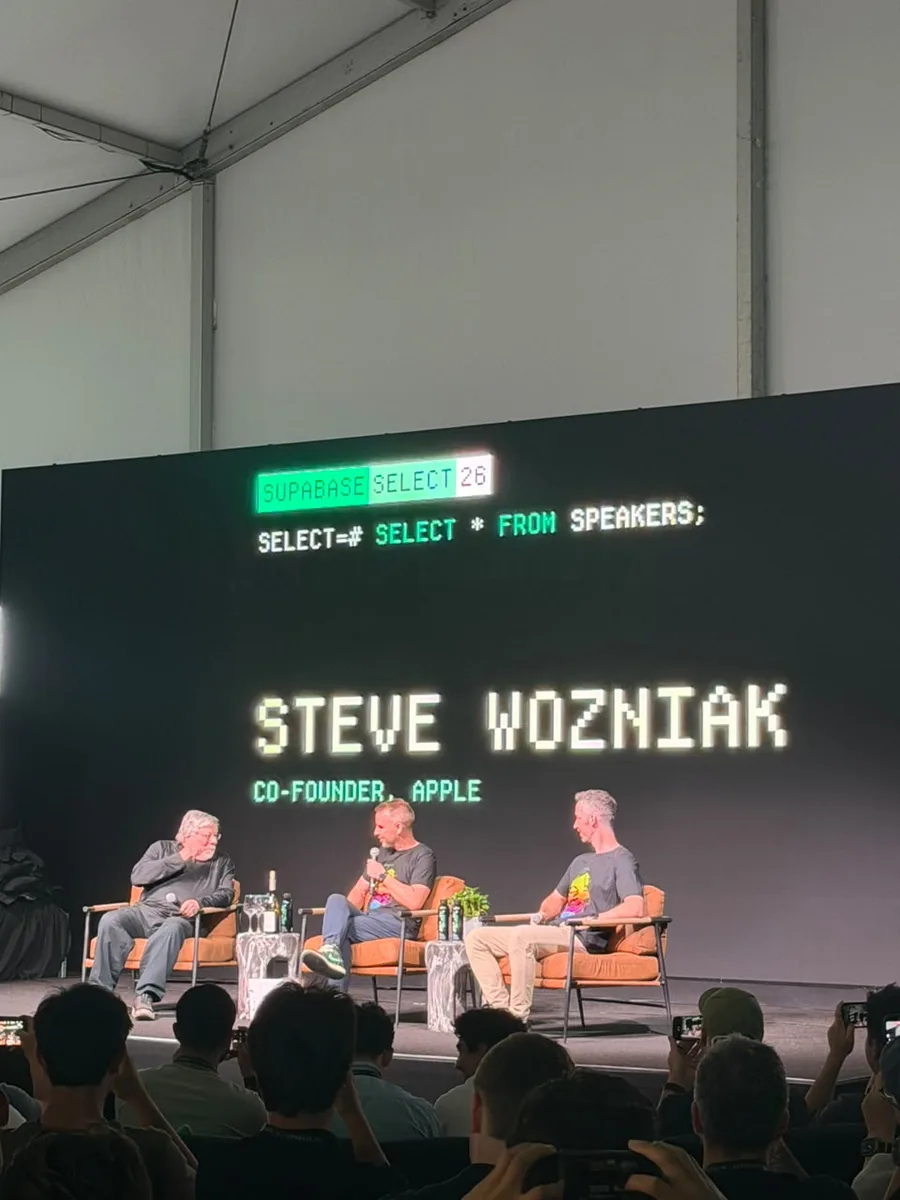
For us, bringing these careers together invites reflection on the relationship between a technical possibility and a product people can use. That is also a question for industrial intelligence: how to turn scattered information and AI capabilities into a tool that is understandable, useful and connected to the work.
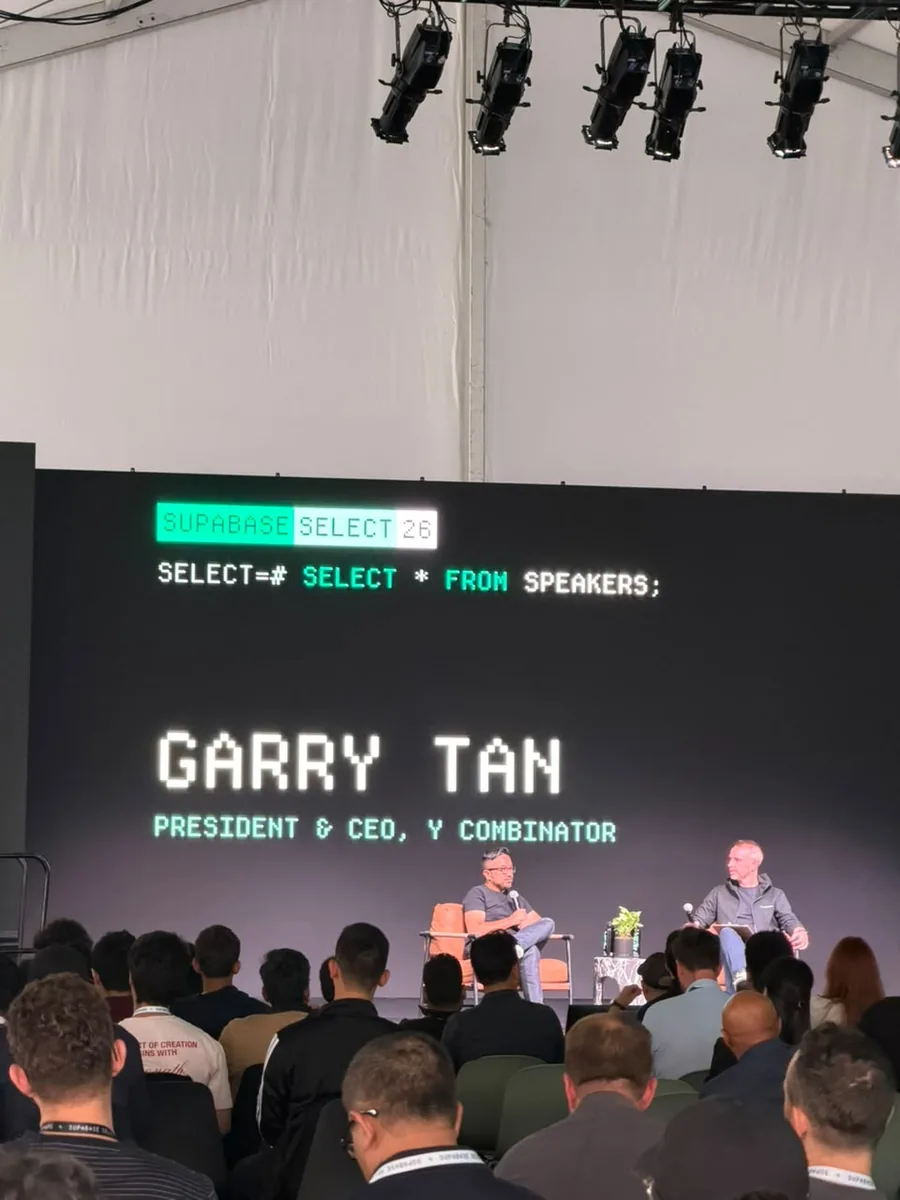
In his conversation with Paul Copplestone, Garry Tan stressed that a company's fundamentals still hold: understand the user, talk to them, build a first version and check whether it solves their problem. He also shared his experience with AI-assisted development tools and knowledge retrieval systems.
Another point especially close to Teseo's work was his reference to companies that use software and agents to produce better data. The ability to build faster coexists with the need to define what information a customer needs and how to demonstrate its usefulness.
Our reading is that a demo gains value when it makes it possible to examine a concrete need. In Teseo's case, that need is helping a company—or its agent—research an industrial market with enough evidence to separate what is known from what still needs to be verified.
Supabase organized its announcements around three fronts: building applications, operating them with greater visibility and scaling their infrastructure. For Teseo, the most relevant announcements are those that bring agent-driven development closer to a reviewable operation, with controlled access to data and the ability to preserve the context of the work.
| Announcement | What changes |
|---|---|
| Declarative Schemas 2.0 | Lets teams keep the database schema in SQL files and generate migrations with pg-delta. |
| Local development without Docker | Makes it easier to run Supabase with native processes; announced in alpha, disabled by default. |
| Supabase Compute | Proposes running long-lived services and agents close to the database; presented in private alpha. |
| MCP server for applications | Lets users' agents connect to an application, using authentication and access policies. |
| Operations tools | Expand log querying, issue detection and incident investigation with agents. |
| Multigres and OrioleDB | Address Postgres availability and storage; at Supabase they were announced in private alpha and public beta, respectively. |
Availability status according to the official recap published on October 2, 2026.
These capabilities open up possibilities for developing services that research, query data and wait for human decisions. Their usefulness depends on how they are integrated into each product. In our case, the design must make it possible to reconstruct where a claim came from, how it was reviewed and which version an authorized user can query.
On October 3, the Supabase Select 2026 Hackathon shifted the focus to building projects. The call for entries set criteria for functionality, innovation, user experience and impact. For Teseo, it was the place to present an application of its sector expertise to the work of AI agents.
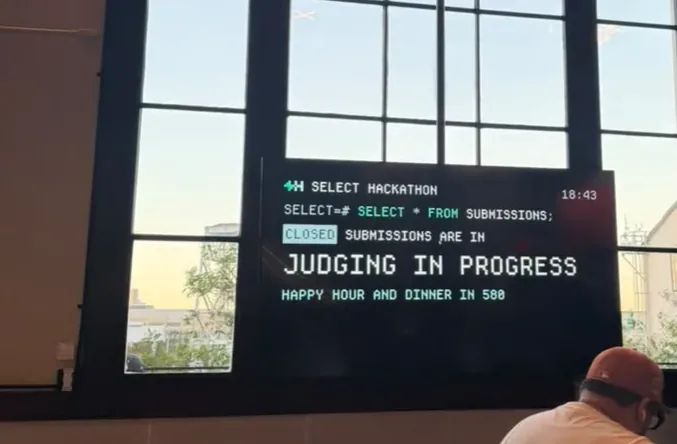
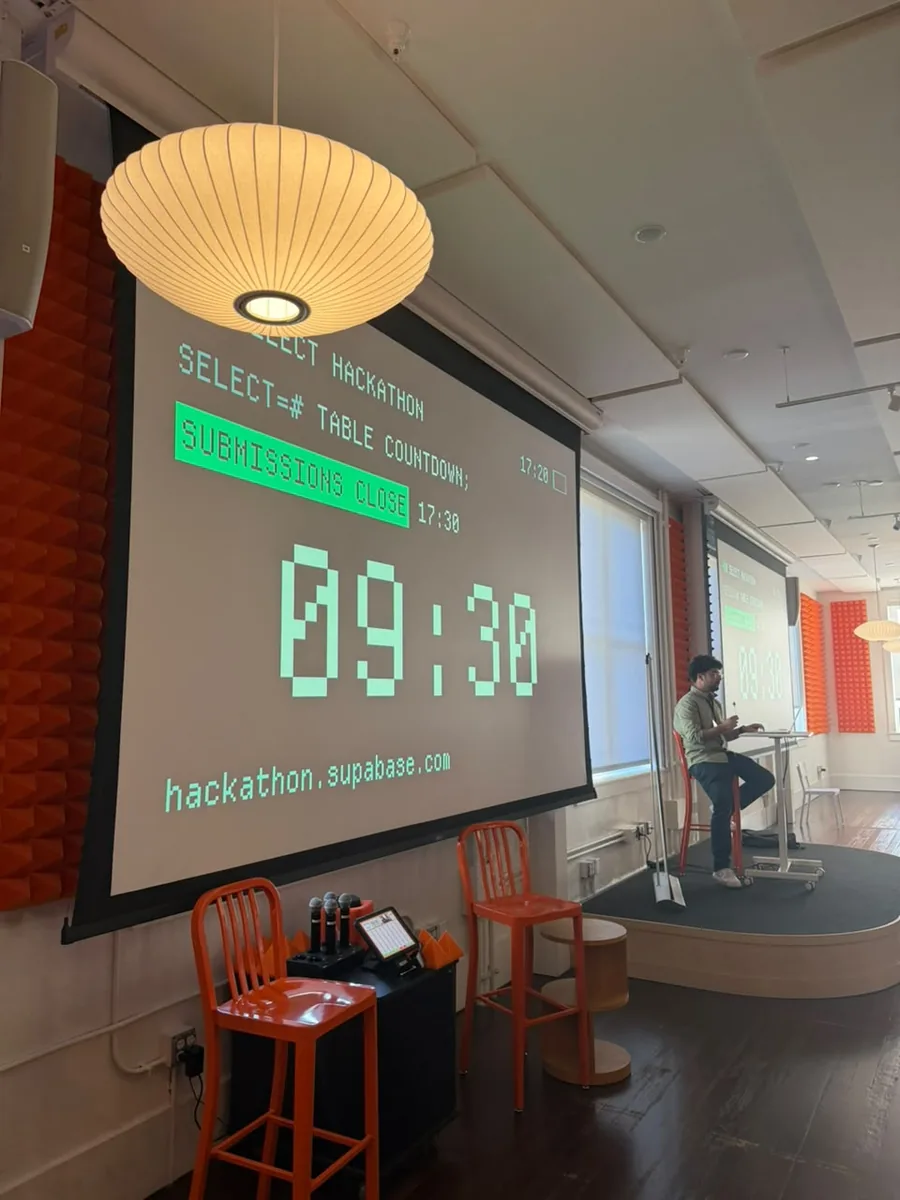
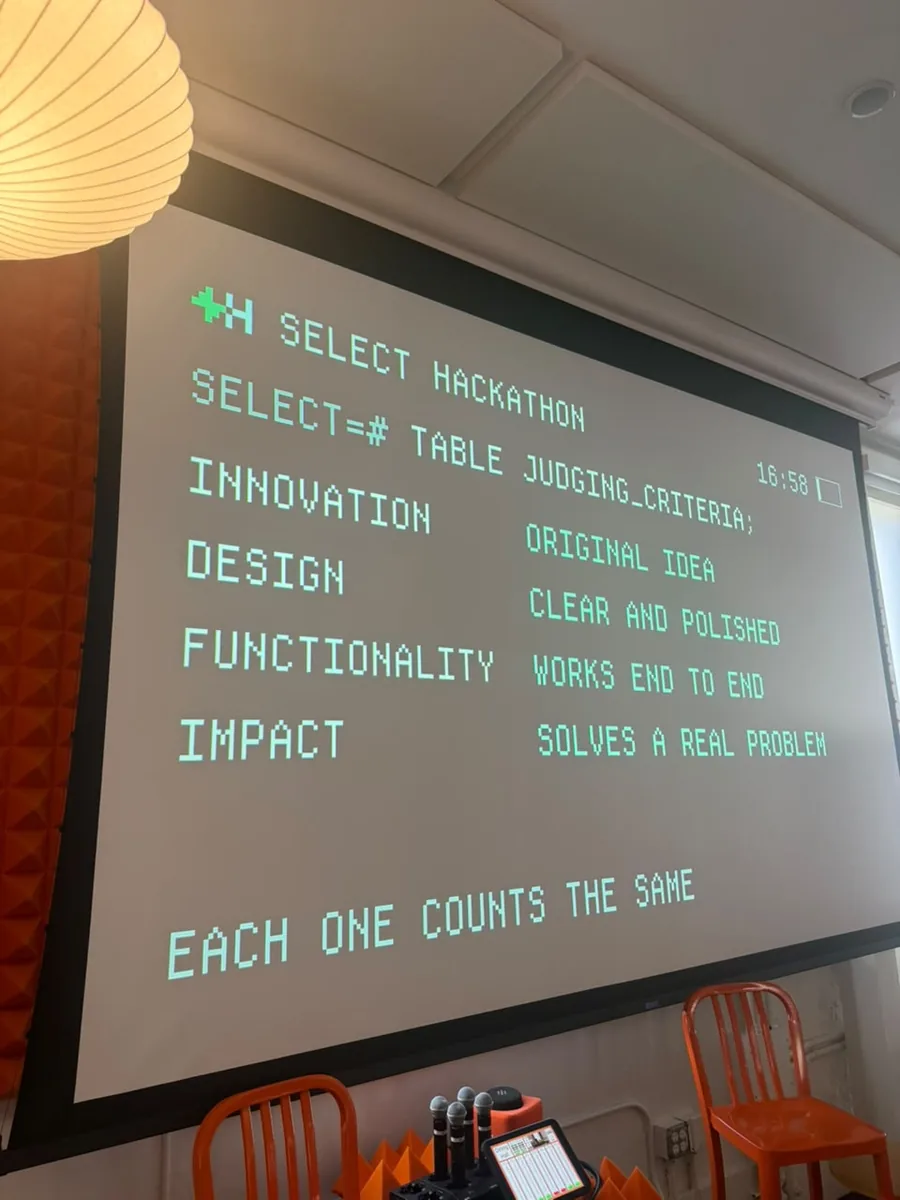
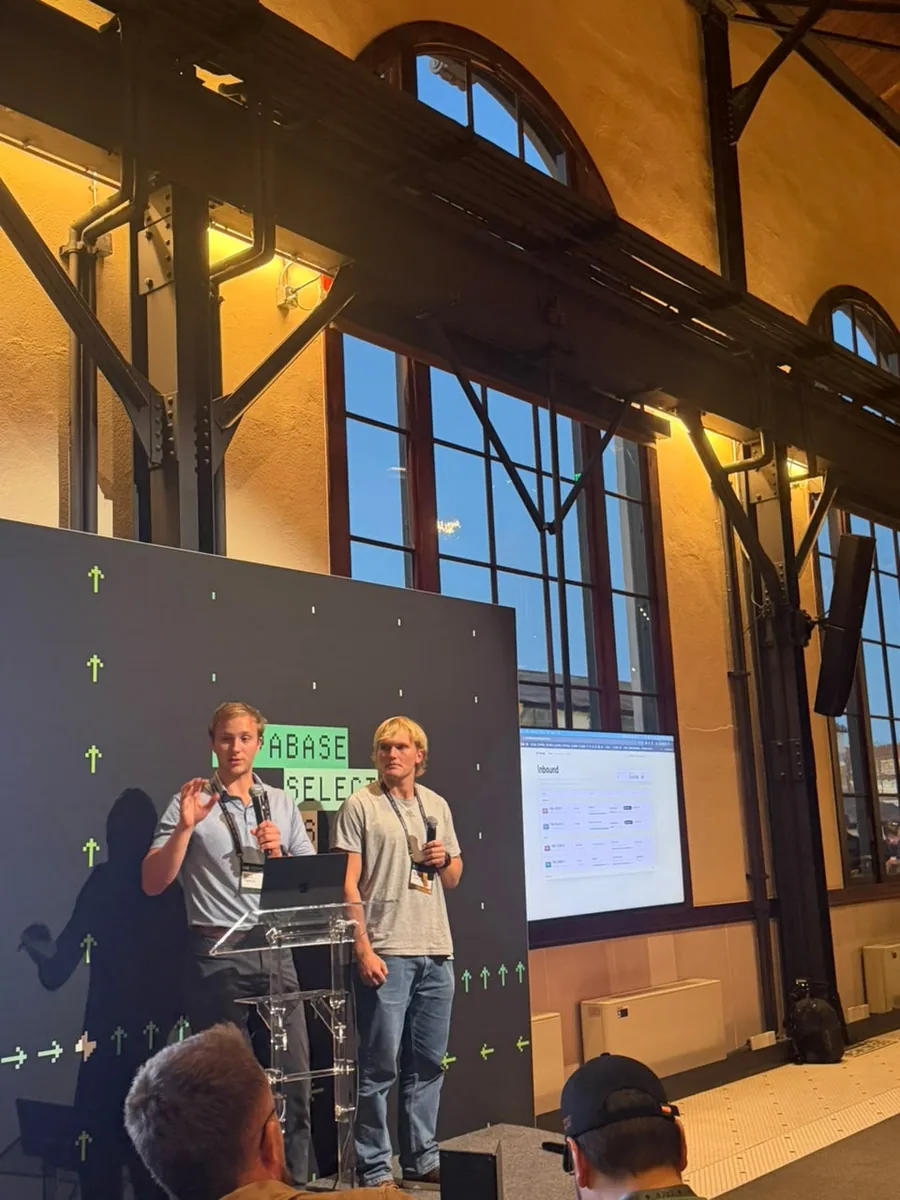
The proposal presented, H0 ConcreteOS, starts from a common problem in industrial research: data on companies, facilities and capabilities can be spread across websites, documents and records with different dates and levels of backing.
An agent looking for business opportunities needs to interpret those differences. It must know whether it found a documented fact, an estimate or an open question. The project proposes organizing that information and making it queryable by other agents, starting with concrete producers in Mexico.
The demo presented by the team takes a concrete request: a U.S. admixture manufacturer's agent is looking for ready-mix concrete producers in Querétaro. The walkthrough shows how to connect the query with gap research, documentary evidence, human review and delivery of an updated version through MCP.
MCP, short for Model Context Protocol, serves here as the channel through which an external agent queries the service's tools and results. In the proposal, access and review rules determine what information it can receive.
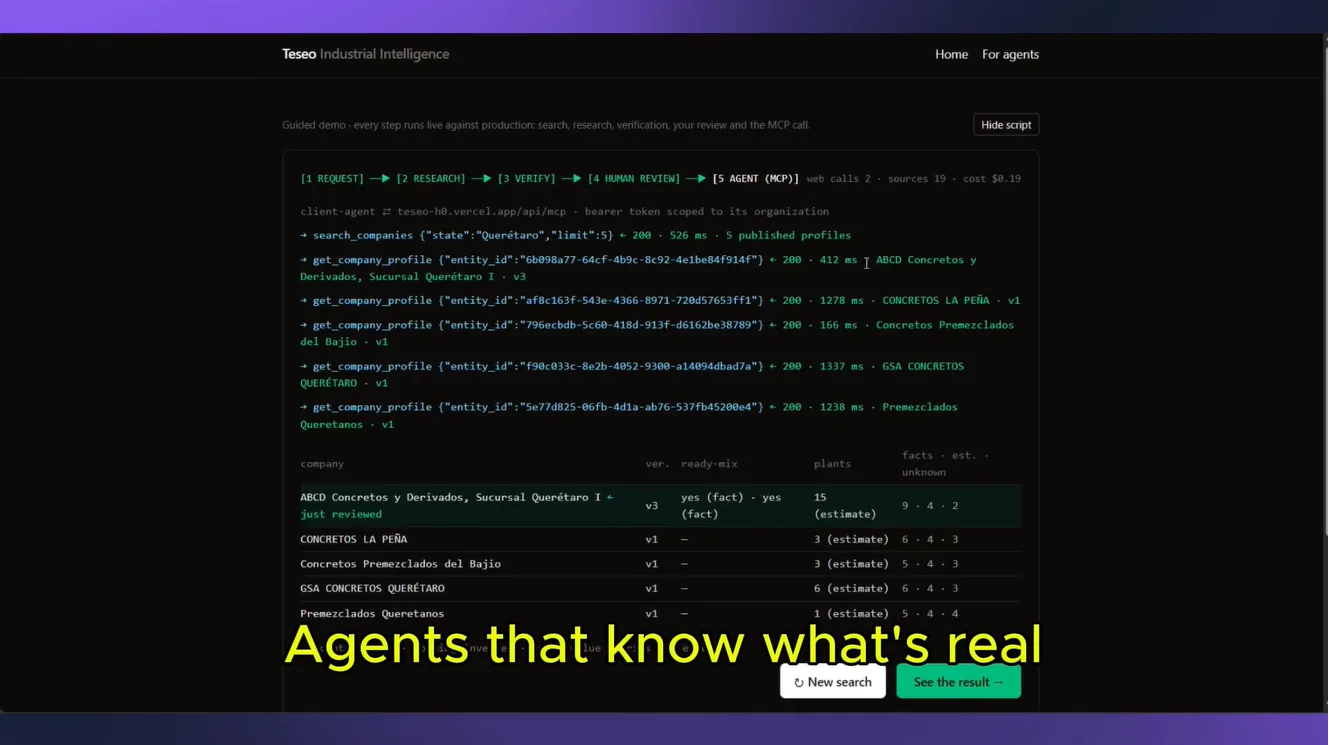
| Demo stage | Role in the walkthrough |
|---|---|
| Initial query | Retrieve the profiles published for the authorized consumer and flag the missing data. |
| Gap research | Look for additional information; each candidate claim must come with a URL and a verbatim quote. |
| Verification | Check the documentary support and keep contradictions for review. |
| Human review | Accept or reject claims based on their evidence. |
| Version publication | Record the decision and make the approved information available for authorized queries. |
| Consumption by another agent | Deliver structured information that distinguishes facts, estimates and unknowns. |
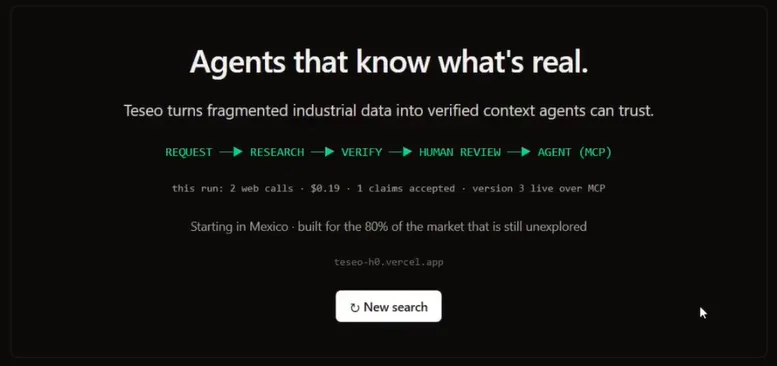
The project's core principle is: models propose; rules and human review authorize.
For example, if two sources report different figures for a company's fleet, the design keeps the discrepancy for review. Averaging the values would produce a third, unsupported figure. Likewise, missing information on production capacity must remain visible as an unknown.
The architecture assigns Supabase the persistence of records, evidence and review statuses. It also provides permissions for people and agents. The hackathon prototype represents an initial scope; broader coverage and more extensive evaluations are part of its planned evolution.
For a company exploring suppliers, customers or expansion opportunities, knowing what backs the information helps guide the next step. Knowing what is documented, what is estimated and what remains to be confirmed helps decide where to research, what to ask and which conclusions still need validation.
This is the link to our experience in industrial market intelligence and to the sector knowledge built around ConcreteOS. The proposal explores how to turn that work into structured context for other systems, while keeping the evidence and the review criteria.
Supabase Select and the hackathon made it possible to connect the conversations about agents with a specific industrial application. For Teseo, the opportunity lies in developing information services that a person can review and an authorized agent can use.
What information does your company need to verify before bringing AI agents into a process? Talk to Teseo Data Lab about your case and the data needed to develop an application with industrial context.
Our team can generate a custom analysis with market intelligence specific to your area.
Request analysis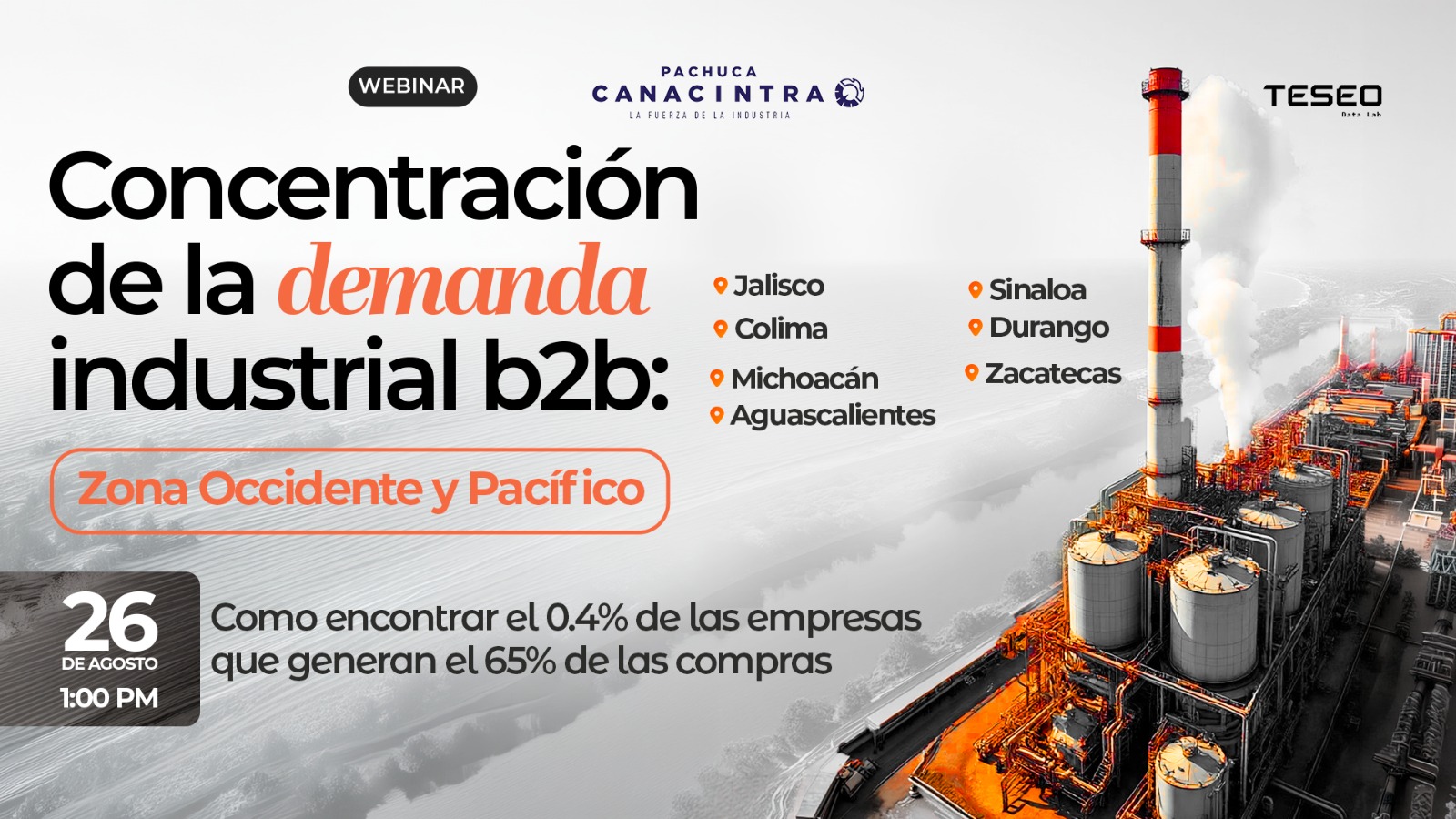
Mexico's Western–North Pacific region concentrates more than one million economic units, yet of 96 candidate companies only 35 justified commercial priority. The method that narrows an industrial market down to the accounts that truly deserve effort: category, chain, corridor, account, and signal.
Teseo Data Lab is an active member of the OpenAI Partner Network at the Select tier. What it means for our clients, how the firm is evolving toward AI, Data & Industry Intelligence, and what was announced at OpenAI DevDay 2026.
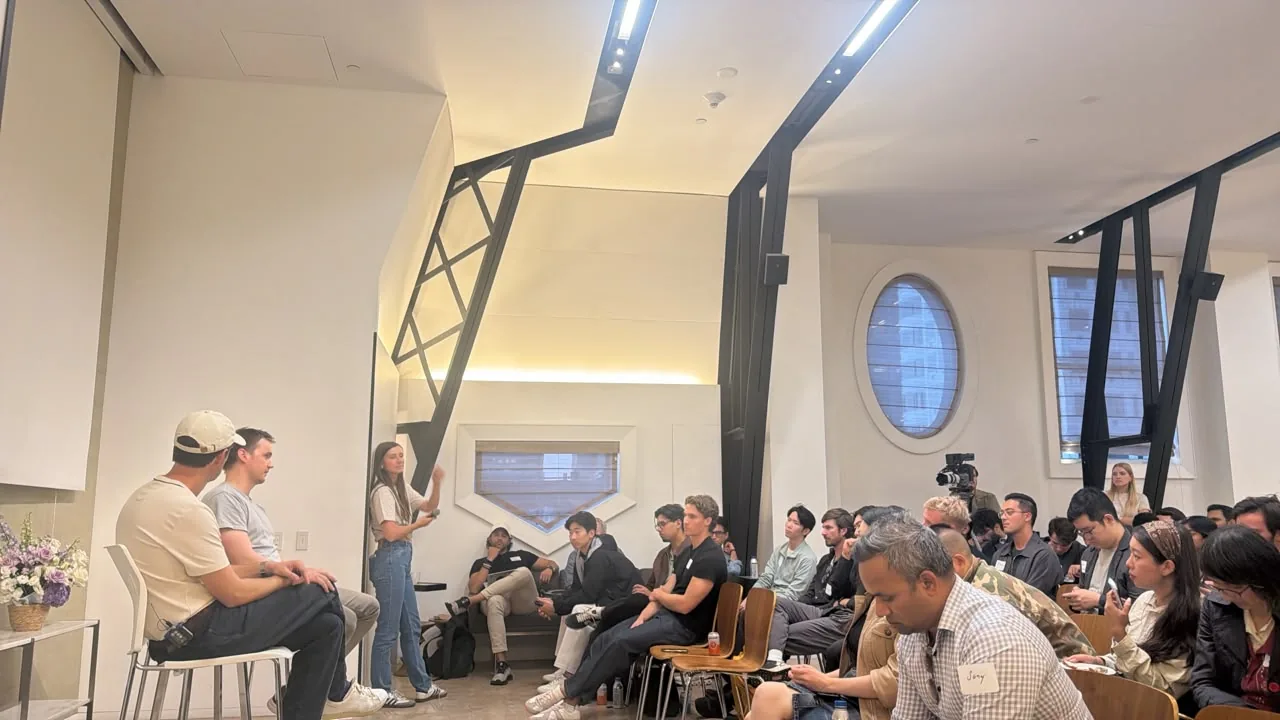
Teseo Data Lab attended How AI Models Learn to Do Real Work, OpenRouter's event in San Francisco. How industrial data could serve as a reference to check whether an AI model does the work a company actually needs.