Entering the U.S. Starts with Understanding the Market
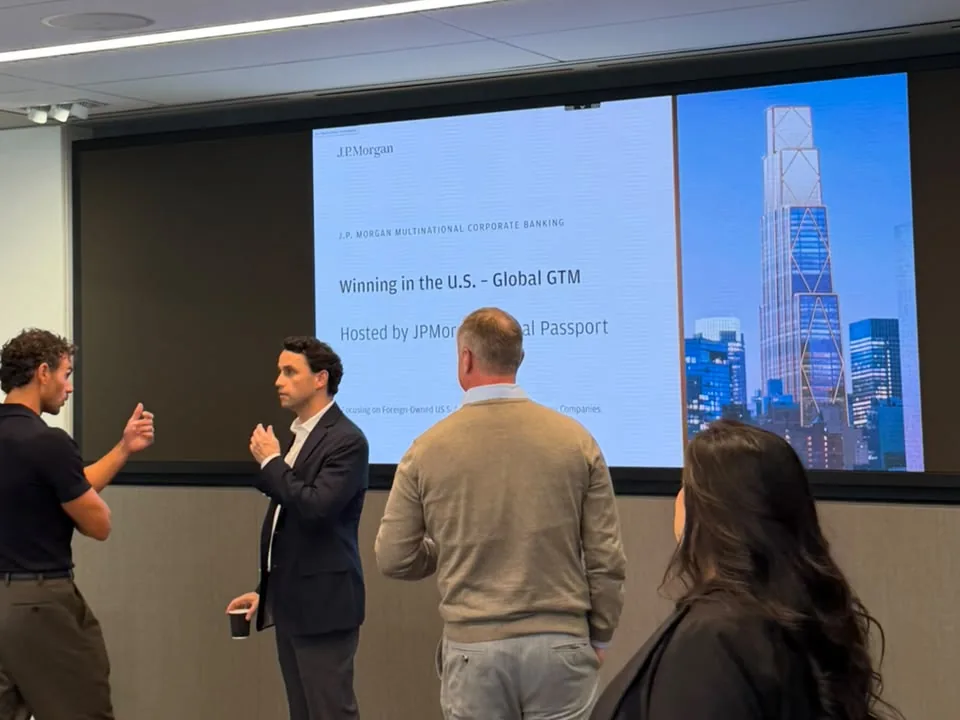
On October 5, 2026, Teseo Data Lab took part in Winning In The U.S: Global GTM, an SF Tech Week gathering in San Francisco focused on international companies expanding into the U.S. market. The conversation brought together perspectives from Build Momentum and J.P. Morgan Global Passport on customers, positioning, partnerships, and operational readiness.
For Teseo, the topic connects with a central question in our work: what evidence does a company need to decide where to grow and how to compete?
Experience in the home market offers a starting point. Entering another geography requires understanding which parts of that experience remain relevant, what needs to be adapted, and what must be proven with new customers. From our perspective, that is where go-to-market strategy and market intelligence meet.
The event linked commercial decisions to the conditions needed to sustain an operation in the United States. Choosing the first customer, building partnerships, preparing for investors, and defining a local presence are all part of the same growth decision.

The panel featured Barry O’Brien, Global Co-Head of Global Passport at J.P. Morgan, and Brandon Newkirk, GTM & Growth Expert in Residence at Build Momentum. Michael Meo, founder of Build Momentum, was the host and moderator. Together, their backgrounds covered international expansion, banking, positioning, and business development.
For Teseo, the value of bringing these perspectives together lies in examining expansion as a set of connected decisions. The chosen segment shapes the sales message; the channel determines how to reach that buyer; and the way the service is delivered defines the resources needed to serve it.
Having customers, revenue, or a product in use provides evidence of a company’s ability to solve a problem. When entering the United States, the task is to verify whether that problem carries the same priority, who makes the purchasing decision, and which alternatives the target customer currently uses.
A go-to-market strategy, or GTM, defines which segment will be served, what value proposition will be presented, and through which channels that proposition will be turned into sales. To apply it to a new market, it makes sense to test commercial hypotheses against local information and conversations with buyers.
In our view, validation can be organized around concrete questions:
| Decision | Question worth answering |
|---|---|
| Initial segment | What type of customer has the problem we can solve and reasons to address it now? |
| Value proposition | What outcome does that buyer consider important? |
| Competition | How does the customer currently meet the need, and what would have to improve for them to switch? |
| Sales channel | Through what means can we reach the people who use, evaluate, and buy the solution? |
| First test | What scope would let us demonstrate usefulness and agree on a next step? |
These questions help turn a broad intention to expand into a hypothesis that can be researched, tested, and corrected.
Narrowing down the first segment makes it possible to tailor the proposition to a recognizable need. Talking about “U.S. companies” leaves too many variables open; specifying industry, size, buyer role, and operational problem helps design a useful sales conversation.
Consider a Mexican company that develops software for industrial suppliers. It could explore manufacturers, distributors, or contractors. However, each group may have different purchasing processes, integration needs, and priorities.
A first exercise would be to choose one of those profiles and research how it organizes its quotes, what information it needs to respond, and where delays occur. With that foundation, the company could design a test focused on a specific activity and define, together with the customer, how to evaluate the result.
The sales proposition also becomes more precise. “Digitizing operations” can be translated into an understandable goal: preparing quotes with up-to-date information, keeping track of each request, or identifying which opportunities need attention.
For Teseo, customer knowledge makes it possible to connect a product’s capabilities with a purchasing decision.
A business relationship starts producing useful information when it helps identify a need, reach a relevant counterpart, and agree on a next step. That is why the work that follows a presentation is part of market development: understanding what opportunity exists and what is needed to move forward.
Partnerships and introductions were part of the event’s focus. Build Momentum also brings local operators, business relationships, and execution support into its offering for companies looking to enter the United States.
From our perspective, each relationship should have a defined purpose. A distributor can help you understand a channel; a potential customer, test a need; and a local specialist, identify operating requirements.
Recording the problem discussed, the decision-maker, and the next commitment makes it possible to distinguish between an initial conversation, an opportunity under evaluation, and an agreed pilot. That distinction helps assess the traction that is actually being built.

A local presence needs to match the work the company is prepared to do. Decisions about hiring, customer service, billing, and operating resources make sense when they are tied to the segment, the service, and the volume of activity the company aims to handle.
Investor readiness and banking and payments structure were also among the event’s topics, along with the question of when it makes sense to hire locally.
Our take is that an expansion plan should make its dependencies visible. If a test requires support during certain hours, that resource must be planned for. If an opportunity depends on an integration, its scope needs to be defined before committing to a date.
The same clarity helps explain the growth project: what has been validated, what is still a hypothesis, and what resources would make it possible to test the next step.
At Teseo, we have also approached entry into the U.S. market through analysis of the California–Mexico corridor. Our San Diego Business Mission 2026 report, produced in collaboration with CCI France México, explores the region’s trade relationship and sector opportunities for Mexican companies.
This work makes it possible to take the expansion conversation to more specific questions: which sectors show demand, how a company’s capabilities relate to that opportunity, and which markets deserve deeper research.
From our perspective, that preparation gives direction to the development of business relationships. A company can come to a conversation with a hypothesis about the buyer it is looking for, the need it can address, and the information it still has to validate. The Global GTM event connects with that way of working: linking market knowledge, positioning, and commercial execution.
An expansion decision can move forward when the company defines the market it wants to explore, gathers relevant information, and designs a test with clear criteria. The result may justify a pilot, an adjustment to the proposition, or a rethink of the entry timing.
Our participation in Winning In The U.S: Global GTM broadens that reflection with the experience of companies seeking to grow internationally. For Teseo, market intelligence provides a foundation for asking more precise questions, prioritizing opportunities, and connecting strategy with real execution conditions.
This approach also guides our expansion and territorial feasibility studies, where demand, competition, and the conditions of each location help evaluate growth alternatives.
What does your company need to validate before entering a new market? Talk to Teseo Data Lab to define the opportunity and determine what information you need to make your next decision.
Our team can generate a custom analysis with market intelligence specific to your area.
Request analysis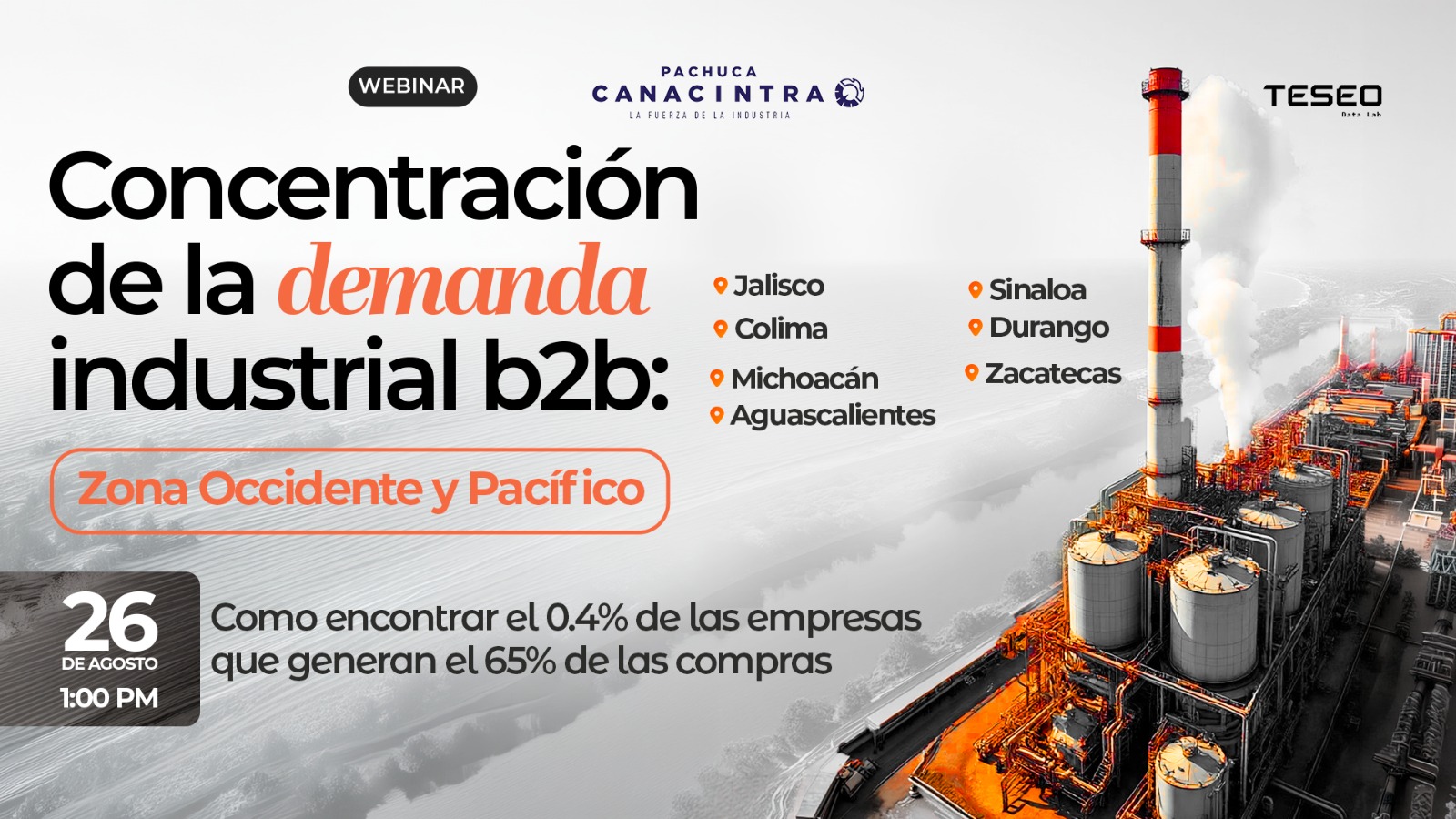
Mexico's Western–North Pacific region concentrates more than one million economic units, yet of 96 candidate companies only 35 justified commercial priority. The method that narrows an industrial market down to the accounts that truly deserve effort: category, chain, corridor, account, and signal.
Teseo Data Lab is an active member of the OpenAI Partner Network at the Select tier. What it means for our clients, how the firm is evolving toward AI, Data & Industry Intelligence, and what was announced at OpenAI DevDay 2026.
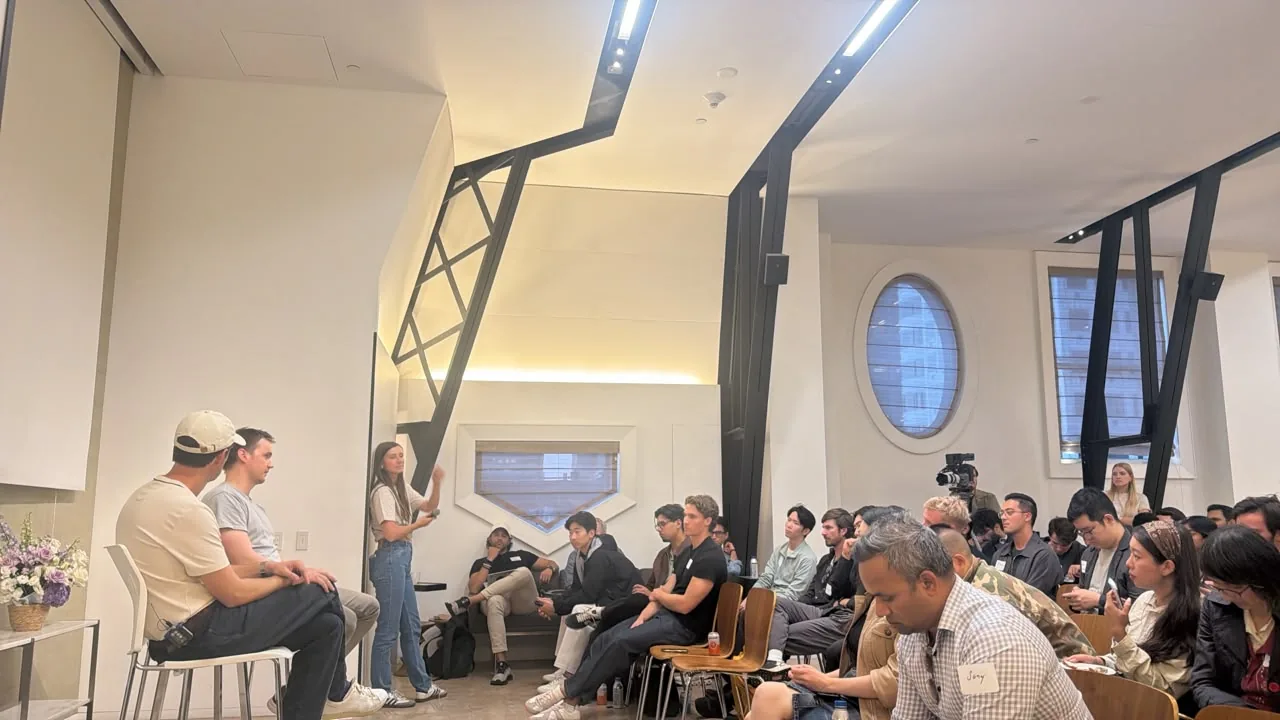
Teseo Data Lab attended How AI Models Learn to Do Real Work, OpenRouter's event in San Francisco. How industrial data could serve as a reference to check whether an AI model does the work a company actually needs.